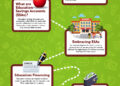
The Minnesota House Education Finance Committee held a hearing Tuesday (March 10) on H.F. 3490, which would opt Minnesota into a new federal education tax-credit program that allows scholarship-granting organizations (SGOs) to provide scholarships to eligible public school, non-public school, and homeschool students.
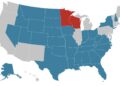
The federal tax-credit program was enacted by Congress last summer and is now part of federal law. However, scholarships will only be awarded if governors opt their states into the program. More than half of states have announced their intent to participate, but Minnesota is not among them. H.F. 3490 would change that, adding Minnesota to the list.
As a federal tax-credit program, opting in would not increase state spending or reduce public education funding. Instead, it would expand educational support for Minnesota students through private donations incentivized by federal tax credits while leaving existing state education dollars unchanged.
Because roughly 90 percent of Minnesota students attend public schools, most students eligible for scholarships would likely come from the public school system — a point I emphasized in my testimony. Despite this, several Democratic legislators indicated they would oppose the bill because it would allow private school students to receive scholarships too.
Democratic legislators also repeatedly referred to the bill as a “voucher” program, as did testimony from the Minnesota Department of Education and the Minnesota School Boards Association. However, the proposal operates differently. Unlike vouchers, the tax-credit scholarship program is funded by private donations, not direct government payments. Vouchers can typically only be used toward tuition at non-public schools. The federal tax-credit scholarship can be used by eligible students in all learning environments for a variety of educational services.
Perhaps the distinctions between the two policies simply aren’t understood, given that the “voucher” label continued to be used throughout the hearing. Or perhaps using the politically loaded language is more convenient for opponents.
Either way, by the end of the hearing, the policy divide became clear. Democratic legislators on the committee are willing to jeopardize millions in potential scholarships for public school students just to block non-public school students from receiving the scholarships as well.
This opposition reflects longstanding resistance to school choice policies, but it reaches a new level with this policy, considering it would significantly benefit public school students and teachers.
For example, public school students could use the scholarships for supplemental services such as tutoring, specialized therapies, test preparation courses, or exam fees. They could also use the dollars for supplies, an expense teachers often pay out of pocket. According to estimates from Education Reform Now, if just 30 percent of Minnesota taxpayers made donations to SGOs and took the full federal tax credit ($1,700), more than $487 million could be available for scholarships each year.
Refusing to opt in will come at a great cost to Minnesota students in all learning environments, while the “wealthy” families that Democratic legislators decry as the only beneficiaries will see no negative impact. They, along with other interested Minnesota taxpayers, can still claim the dollar-for-dollar federal tax credit by donating to eligible SGOs in the 27 other states that have already opted in, including our neighbors North Dakota, South Dakota, and Iowa.
Those philanthropic dollars should remain here in Minnesota, supporting our students, our schools, and our communities. Regrettably, misinformation and political word games could make students statewide pay the price.