Whatever your feelings are about the new federal education freedom tax credit (EFTC) — and there are lots out there — the program is law and will go into effect Jan. 1, 2027.
The question before governors is whether the money will benefit K-12 students in their states or elsewhere.
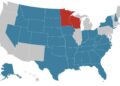
Under the Walz administration, Minnesota has chosen not to opt in to the EFTC for 2027. Minnesota taxpayers can still qualify for the federal tax credit by donating to scholarship granting organizations (SGOs) in participating states, including our neighbors North Dakota, South Dakota, and Iowa. But Minnesota students won’t qualify for the scholarships funded through the credit.
This decision, though, isn’t permanent.
With a new gubernatorial administration set to take over in January, the stakes for Minnesota’s future participation are huge. Gubernatorial candidate Lisa Demuth has committed to opting Minnesota into the program. Candidate Amy Klobuchar has not, telling the state teachers’ union that she will “not opt Minnesota into a program that does not treat public school students fairly.”
Both public and private school students in households at 300 percent of the local median income or less are eligible for scholarships if they reside in a state that opts in. Proposed rules and temporary regulations from the U.S. Treasury Department have helped clear away some of the cobwebs around the EFTC, leaving blue-state leaders with no valid excuses to block their families from accessing the scholarships, according to The Wall Street Journal‘s Editorial Board.
New projections from Education Reform Now, a center-left organization, estimate that if just 30 percent of Minnesota taxpayers who owe at least the full credit amount (up to $1,700 for individuals and $3,400 for joint filers) redirect those dollars from the IRS to eligible SGOs, we are talking about nearly $1.1 billion that could be used to support students. That is more than what was spent statewide on student transportation in fiscal year 2025. Even at 15 percent participation, the scholarship funds at stake amount to over $541 million, which is roughly what was spent statewide on pupil support services that same year.
High taxpayer participation rates will not happen overnight, Education Reform Now stresses, so it will be important for states to “experiment with different strategies to build awareness and participation, e.g. partnering with employers, enlisting tax preparers, running public campaigns, using local influencers, and more.”
Eligible public and nonpublic school students could use the EFTC scholarships for tutoring, tuition, summer learning, special education therapies, supplemental or enrichment opportunities, school supplies, and technology, to name a few.
With 31 states officially opted in, the message to the governors still weighing participation is straightforward, according to Education Reform Now: Judge the EFTC “on its merits and on the chance it gives you to change how your state supports students and families.”